The forecast predicts that the high will be 39 and the low will be 27.
Colleges of Human Medicine and Osteopathic Medicine will merge, the president says
Michigan State University will combine its Colleges of Human Medicine and Osteopathic Medicine into a unified college of medicine, among other changes to its health education and research, the university announced Wednesday afternoon. The announcement follows over a year of deliberation, after MSU President Kevin Guskiewicz first introduced the merger as part of his “One Team, One Health” initiative in February 2025. As part of the initiative, MSU will also create a new College of Health Sciences and “One Health Research Network” to assemble faculty and infrastructure “around shared thematic research priorities.” The unified college of medicine will offer both Doctor of Medicine and Doctor of Osteopathic Medicine degrees, Guskiewicz wrote. He wrote that a unified college would create a “larger, more visible presence” on campus and strengthen its ability to build partnerships, create opportunities for students, expand current programs, and launch new initiatives.
Izzo still in need of bench help entering Big Ten Tourney
Last season, strength in numbers was the mantra repeated by head coach Tom Izzo; now, it’s strength in fewer numbers with a heavy reliance on starters. During the 2024-25 season, of MSU’s 77.7 points per game, 49 came from starters — 63%. This season, starters account for 56.4 of the Spartans’ 78.8 points per game — 72%. The 14% increase in starter scoring is no small difference, especially heading into the most strenuous month of the season. The Spartans can play up to three games in three days this weekend in Chicago, then two games each weekend until they lose in the NCAA Tournament. Izzo told reporters Tuesday he’s going to need more production from his bench. “If you look at our defensive numbers, they’re about the same as last year. If you look at our offensive numbers, they’re a little better than last year,” Izzo said. “If you look at our depth numbers, our bench numbers, and our strength in numbers, it’s not as good,” Izzo said. He knows the bench hasn’t lived up to its potential, averaging 15 points per game as a unit.
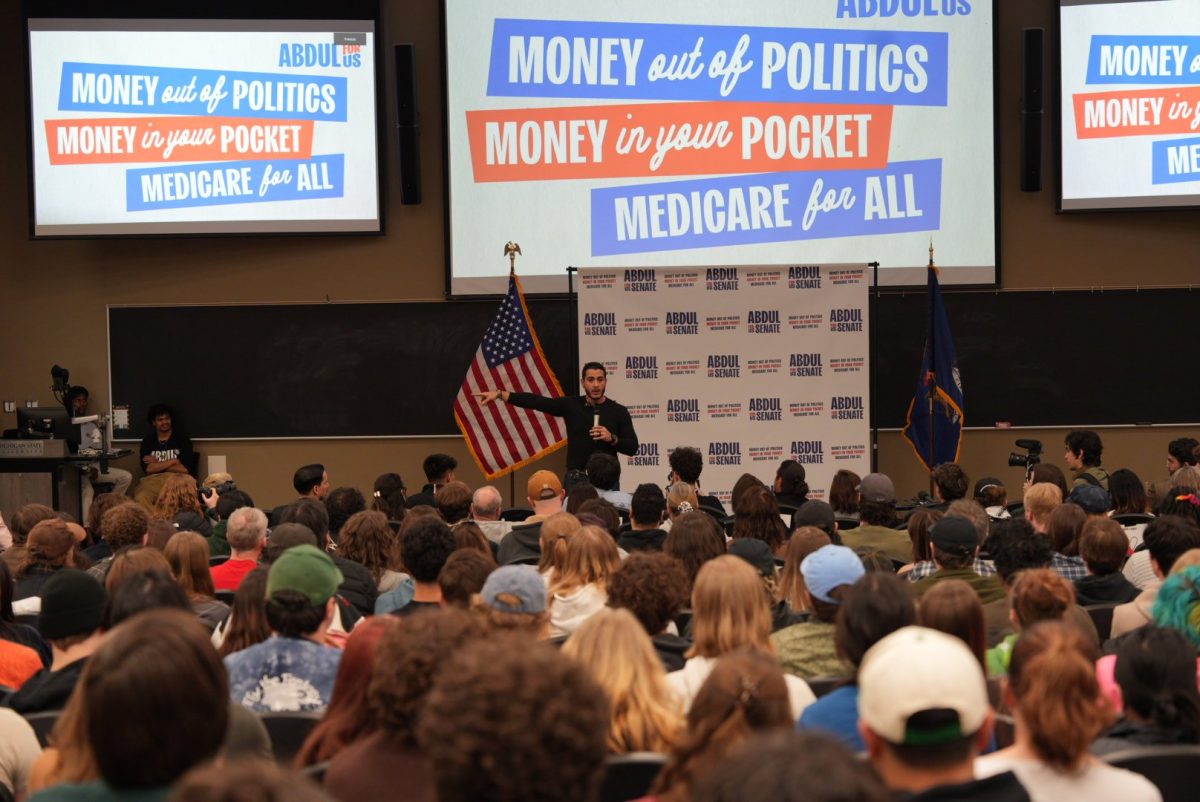
The day after President Donald Trump won his first election in 2016, Michigan Senate Majority Whip Mallory McMorrow googled how to run for office. She was a Michigan transplant from New Jersey and an industrial designer by trade, and had never worked on a campaign. In 2025, months into Trump‘s second term, McMorrow would launch her campaign as a Democratic candidate for the U.S. Senate ahead of the 2026 November election. November marks a turning point for the future of the Democratic Party, which lacks much of the federal power needed to combat the Trump administration. Currently, the Republican Party has control over the presidency, the House of Representatives, and the Senate. McMorrow hopes to gain some of that federal power back in her pursuit of a U.S. Senate seat. “When we come together and get organized and use our voices, you can make the change you want to see, even if we don’t hold the gavels on the battle,” the senator said at a Michigan State University College Democrats event Tuesday evening. Currently a state senator in Michigan, McMorrow has remained a vocal critic of the Trump administration. During the 2024 Democratic National Convention, she warned attendees about Project 2025, a playbook for the conservative movement’s takeover of the federal government that was a target of Democrats during the campaign. That document laid the groundwork for several Trump initiatives during his first year in office, including drastically downsizing the Department of Education and ramping up deportation efforts. Change takes time and organized effort, McMorrow said.
What Heated Rivalry Reveals About Love, Identity and Belonging
Based on Rachel Reid’s bestselling novel, “Heated Rivalry” follows NHL stars Shane Hollander and Ilya Rozanov, long cast as fierce rivals in the public eye while quietly building a secret relationship off the ice. The show shows the evolution of their romance as they navigate their identities, self‑worth and the strain of sustaining a queer relationship under public scrutiny and pressure. These themes have opened up discussions about queer visibility, the culture of professional sports and what modern romance can look like. The success of “Heated Rivalry” shows that people are craving stories that capture what modern relationships can actually look like. At the end of the day, the show models a partnership built on vulnerability and authenticity; something that should be normal in any relationship, queer or straight.