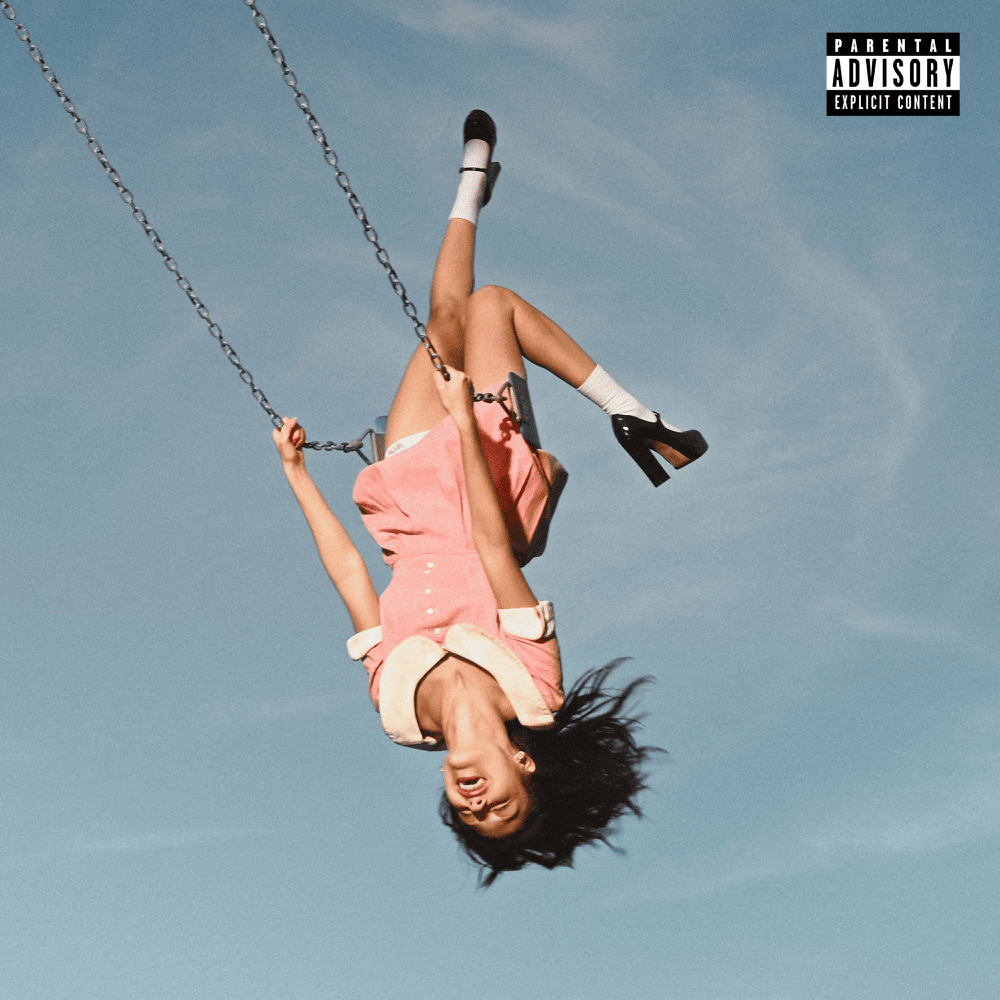
Olivia Rodrigo’s third album, you seem pretty sad for a girl so in love, cultivates a sound we’ve yet to hear from the singer-songwriter and experiments conceptually with a chronological musical retelling of a relationship.
Rodrigo acknowledged in her sophomore album Guts that it was time for a change; “teenage dream,” the album’s conclusion, teased Rodrigo breaking away from her signature teenage angst as she continues to grow as an artist and human. (When am I gonna stop being great for my age and start being good?)
Maturing in life and relationships is a relatable topic for Rodrigo’s listeners, many of whom feel like they’ve grown up with the singer. It’s only logical her third album would reflect this, as getting even one year older in the music industry (particularly for a female artist) can be excruciating – societally, we continue to raise our expectations and lower our attention spans.
I was curious to see what Rodrigo did next, as Sour and Guts, while similar in angsty-grunge nature, are distinct in maturity and point of view. It can be argued whether or not she stuck the same landing with you seem pretty sad for a girl so in love, but Rodrigo’s songwriting talent remains undeniable, and the best decision she makes on this record is to lean into its concept.
Some of my favorite moments on the album are sonically inspired motifs reminiscent of The Cure (“u + me = <3”), Foo Fighters (“the cure”), along with other ’90s rock influences (the likes of Radiohead and The Smashing Pumpkins). Rodrigo has always had an individualized sound, unlike the other pop girlies residing on the charts. I was admittedly a bit disappointed that her third album didn’t incorporate the rock sound she appeared to be teasing at live performances/Guts tour stops.
Rodrigo did acknowledge she steered away from this on the record in an interview. “I have such a reverence to rock music…but going into [writing the album] it didn’t feel exciting to me.”
Seeing Rodrigo continue to shape her sound and stand out as an artist is still inspiring, but without her trademark, shouty elements evocative of ’90s/2000s pop-rock, there’s more ambiguity in you seem pretty sad. Haunting moments of silence and emptiness are effective in the ballads, but the love songs instrumentally lack the punch that sets Rodrigo apart. The album has a clear identity, as does Rodrigo’s sound, but without the rock and grunge, some of the tracks are left sonically confused. I’m excited to see her live interpolations of this album; you can’t deny Rodrigo’s stage presence and how she energetically reimagines her music live, punching up songs that might drag otherwise.
Opening with “drop dead,” Rodrigo begins her retelling of a love story. The track is bubbly and uplifting. The pre-chorus and second verse contain the signature Rodrigo instrumental and spoken lyric. The song encapsulates the experience of a crush and is just all around bouncy fun.
“stupid song” sets forth the album’s depiction of an all-consuming love, so much so that it becomes a point of insecurity for the speaker (à la Lorde’s Melodrama). Images of the NYC party scene are scattered among Rodrigo’s rich metaphors. The chorus is infectious, and its swell parallels this — the speaker can’t articulate their love for the song’s muse, and every symbol falls short. The bridge is a euphoric moment more closely aligned with recent pop than with Rodrigo’s other work (syncopated speaking and drum beats might remind the listener of a 2010’s Taylor Swift bridge, at Swift’s best).
“honeybee,” the piano love ballad, juxtaposes its devoted lyricism with a haunting melodic throughline. Rodrigo confirmed she and the producers adjusted the love songs to better complement the entirety of the record after the album shifted conceptually, cementing the idea that listeners are on the journey with Rodrigo as the story unfolds.
“Dan [Nigro] and I…after writing the breakup songs and stuff had the fun challenge of going back and tweaking some of the love songs on the record and making them a little more honest…” Rodrigo confirmed on The New York Times’ Popcast. Perhaps this is why “honeybee” is melodically uncanny at times, despite being a love song. “Here’s to hoping” leaves both the listener and speaker in a place of ambiguity – this love story isn’t a sure one.
It’s hard to listen to “maggots for brains” and not imagine it playing during the climax of a rom-com — Rodrigo even revealed on The Tonight Show that one of the lyrics was inspired by a Miranda/Steve moment on Sex and the City. Rodrigo continues her pattern of vivid metaphors to illustrate how the speaker feels without their partner around. In retrospect, it’s fascinating to find clues of codependency or insecurity in the album’s love songs; similarly to rewatching a movie knowing the ending, Rodrigo increases her record’s repeatability by delving into its chronological concept. “maggots for brains,” along with some of the other songs, lack the distinct quality of some of Rodrigo’s earlier work, making it more difficult for them as standalone songs, rather than an extension of the bigger picture she’s painting.
“I’m a sad shell /
Of a woman /
And I’ve got maggots for brains /
But that’s just the thing that happens when my /
When my baby goes away.”
“u + me = <3” is a ridiculously catchy track, and in my opinion, the most musically reminiscent of ’90s rock and The Cure in comparison to the rest of the album. It follows through on what “maggots for brains” drives forward. Considering the later song entitled “the cure,” as well as the Robert Smith feature on “what’s wrong with me,” I wish Rodrigo had broadened her allusions a bit, especially considering she has an abundance of bold musical influences (The Cranberries, Weezer, The Breeders, Fontaines D.C. to name a few).
The weaker moments in “u + me = <3” can be attributed to Rodrigo’s jargon bubble — her sound is significantly more mature, but some of the lyrics fall flat or rely on her earlier songwriting habits (unnecessary moments of teenage angst, attempts to incorporate niche references and narrative specificity that end up dating the song). She toys with the idea of being a “real couple,” playing house in a way that differs from the grounded, mature nature of other songs on the album. That being said, the song is unapologetically itself and is not trying to be anything but a fun, pop-rock love song. I highly recommend listening in a car with the windows down.
“Carve our names into the carseat leather /
You plus me equals a heart forever.”
The chronology of you seem pretty sad for a girl so in love is one of its greatest strengths, but at times hinders Rodrigo’s songwriting. Rodrigo is trapped into a fluid narrative, so any songs that stray away feel a little out of place. “my way” is a return to form for Rodrigo — shouty line delivery, crisp vocal effects, etc. It’s seemingly the only song delivered to a different subject: an ex-girlfriend or a comparable intrusion into the speaker’s current relationship. It’s similar to other songs of Rodrigo’s such as “bad idea right?” and “get him back!”, but differs in messaging. Perhaps the song not being delivered to an ex/current partner withheld Rodrigo from tapping into the strengths that made the other songs work.
While other tracks delve into Rodrigo’s own insecurities, she is no longer threatened and plays into a role reversal in “my way.” That being said, “my way” seems to walk around the speaker’s reasons for their antagonistic approach, and that lack of clarity impedes on the song’s effectiveness. Without a more vivid narrative, the song can’t deliver the same punch that songs of a similar nature do (Paramore’s “Misery Business”).
The “sad” moments of the album (breakup ballads, songs depicting loss and codependency, etc.) are easily the standouts on you seem pretty sad for a girl so in love. Rodrigo is at her best songwriting-wise when she leads with vulnerability and artfully articulates feeling unsure of oneself. “purple” begins the descent, depicting how a relationship once devoted and warm is now codependent to the point of no return, with each partner unable to detach from their tunnel vision (I had big dreams ‘til I tied myself to you). Rodrigo is delicate and masterful in the gradual reveal of what the love story twists into.
“the cure” begins with a raw guitar motif evocative of Foo Fighters’ “Everlong.” The song directly addresses what Rodrigo has seemingly been building up to in every song and album prior; sometimes even the most loving relationship isn’t enough to ease our inner turmoil. Rodrigo admits her insecurities are rooted deeper than any love interest will ever be able to reach, and she’s ultimately on her own. Unless she can do the work to save herself, she’ll never find the answers in anyone else.
“And my head is full of poison, and my heart is full of doubt /
I got toxins in my bloodstream, you tried hard to suck ’em out /
And it feels like medication, and it’s good for me, I’m sure /
But it don’t matter how your love feels anymore /
It will never be the cure.”
“begged,” one of the most lyrically solid songs on the album, illustrates the all-too-familiar uphill climb of wanting to be heard without screaming. The track excels in its simplicity and honesty, depicting Rodrigo’s desire for her partner to show up for her without pleading, especially as time passes in the relationship. Once the rose-tinted glasses come off, Rodrigo confesses it feels as if the bare minimum is too much to ask for from her partner. The Robert Smith feature, “what’s wrong with me,” documents Rodrigo’s realization that the source of her unhappiness and spiraling may be her relationship. It’s not necessarily the strongest song on the album; Smith’s vocals definitely give it the extra push it needs to stand on its own. Ultimately, I think Rodrigo’s apprehension about more directly criticizing the relationship itself infects her songwriting. Her past two albums were rich in detail, particularly in songs directed at an ex. you seem pretty sad, however, leaves more room for interpretation. I think this is an indication of Rodrigo maturing as an artist, sans some of the specificity that laid the foundation for her first two albums.
“less,” however, thrives on Rodrigo’s candor and, like many of her strongest songs, is minimalistic; just Rodrigo, a piano and heartbreaking lyrics. Rodrigo is the sole writer credited on “less.” I’m curious if a record predominantly consisting of piano ballads will ever be in the cards for Rodrigo; “less” is one of the more memorable tracks on the album for me. Unlike earlier songs, “less” is a masterclass in raw simplicity, yet doesn’t feel vacant in any aspect of its sound.
“If loving me means letting go and wishing me the best /
Well then I guess /
I wish, I wish, I wish you loved me less.”
In case you didn’t have enough emotional whiplash already, “less” is followed by “expectations,” an upbeat, techno-pop number similar to that of Chappell Roan’s recent work, in which Rodrigo declares she’s got expectations for her love life and has no intention of settling for less than what she deserves. Rodrigo recently clarified “expectations” was a result of her longtime producer/collaborator Dan Nigro’s advice to write a “mantra song.”
“I won’t settle for a guy with a fake job /
They seem so desperate for lovin’ /
But, baby, I’m not /
Gave my heart with zero stipulations /
Now I take careful consideration.”
If “expectations” is the song that plays at the function, “cigarette smoke” is the teary drive home (I’ve listened to this song on the highway, maybe driving a little too fast — sue me). “cigarette smoke” is my favorite song on this record. It sends the album out on a high, both musically and lyrically, and is a gut punch start to finish. The chorus is haunting, and the song reaches its climax as Rodrigo devastatingly belts out the bitter emptiness in her life in the wake of a failed relationship. I think anyone who’s ever had their heart broken will resonate with “cigarette smoke.” The album’s closer taps into the experience of putting so much energy into someone that the end of the relationship feels like a devastating, almost embarrassing waste. Why can’t we have our time, energy, and love returned to us when it’s over? The song mirrors the beginning of the album perfectly; the sweet, butterflies-in-stomach experiences start to crack and crumble in our memories as we take a more honest look posthumously.
“Tell me something honest so the memories turn dark /
You said that I made loving look easy /
‘Til I made it hard /
Give me back my time and I will give you back your heart /
I thought that we played the perfect couple /
‘Til you didn’t want the part.”