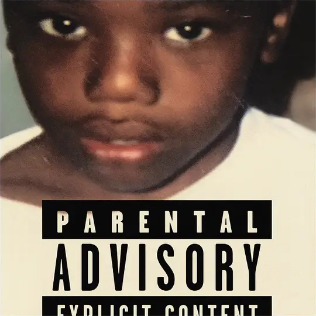

December is a month not well known for album releases. Emphatic to avoid slipping through the cracks of the public eye as the year winds down, most late-year album releases occur long before the calendar turns to Dec. 1. And yet, last year, as many artists were hanging up instruments and retiring to Christmas getaways and blurry New Year’s parties, Geese frontman Cameron Winter was releasing a strange, brilliant and outright otherworldly album.
Evident from the first twinkling guitars is the paradoxical nature of the project. See, despite the misleading title, this is not, in fact, a heavy metal album! Likewise, the opening track “The Rolling Stones” has very little in common with its namesake’s grooves. Instead, you are quickly met with soft, warbling folk.
Within the first few songs, the immediate attention is Cameron Winter’s voice. It dives into valleys of crooning, springs into drive-laden shrieks and makes leaps into muted falsettos (sometimes, all within the same song: see “Nausicaä!”). While Winter is no stranger to vocal bombast, the blaring guitars and wild rhythms of his previous excursion on Geese’s “3D Country” are leagues apart from the piecemeal instrumentation speckled throughout “Heavy Metal”. And yet, the burgeoning rockstar’s voice feels right at home.
The opener “The Rolling Stones” begins on a note of exasperation:
“I will keep breaking cups until my left hand looks wrong /
until my miracle drugs write the miracle song”
From these opening lyrics, the album is colored with a sense of monotony that spreads to all corners of the project. Winter mumbles of burning trash, walking around without any destination, trying to “seduce the wall” and every other manner of repetitive aimlessness. Yet coupled with this deep exhaustion is a sense of humor, absurdity. In fact, take a look at the lyrics that directly follow those above:
“I will keep rolling down until my best shirt rolls off /
until the conga line behind me is a thousand chickens long”
To myself and many others, it evokes that point of depressive numbness where a distant flicker of wry humor snakes its way in, and suddenly, everything is ever-so-slightly funny. The song plods along into metaphors about the death of Brian Jones, irreverent references to the attempted assassination of Reagan and imagined scenes of pianos falling and landing on him. It’s wild, and delivered with a sense of complete dryness, like a pianos raining down is simply an expected occurrence — one we’re all familiar with, even.
To me, Winter’s mirthless delivery of his lyrics is part of what makes them so impactful. He describes frustration in a relationship in the same tone he describes herding chickens into a conga line, body dysmorphia in the same tone as having his arms broken. In a nearly inarticulable way, in the depths of exhaustion, everything is equally absurd.
Yet even within this senseless world, something else quietly persists — hope. Many tracks on the project are about love. The second song, “Nausicaä”, is buoyed by the repeated lyric “love will be revealed”, and the following song, “Love Takes Miles,” is upbeat, simple, and charming:
“You better start a-walking, babe /
Love takes miles”
These two forces of the album clash against each other, sweetness and senselessness in a continual tug of war. When the tracklist reaches the overwhelming “Nina + Field of Cops,” its torrential pianos and brutal, warped lyrics give the sense the latter has won. The song screeches to a discordant finish before the penultimate track, “$0,” begins. If this song could be encapsulated in one word, it would undoubtedly be ‘cathartic.’ And frankly, you’d never know it from the Winter’s warbled moans that commence the track. However, the song builds and builds, and concludes itself with a left turn I hesitate to ‘spoil’ in writing. It’s an experience everyone will have a different reaction to, and to me, worth experiencing without any prior knowledge.
The album’s closer “Can’t Keep Anything” is left to pick up the pieces, and in unlikely fashion, seems to succeed. After an album spent meandering, Winter finally proclaims “I know where I’m going”. It’s unclear where, but in the final two songs, he seems to have found a vague sense of certainty. There are no wild images in the last song, just determination, a destination, and the fragments of a relationship. It concludes:
“I can’t just give everything away…”
and with a pang of pain,
“…to you…”
and as the instruments are set down, Winter exhales,
“…okay.”
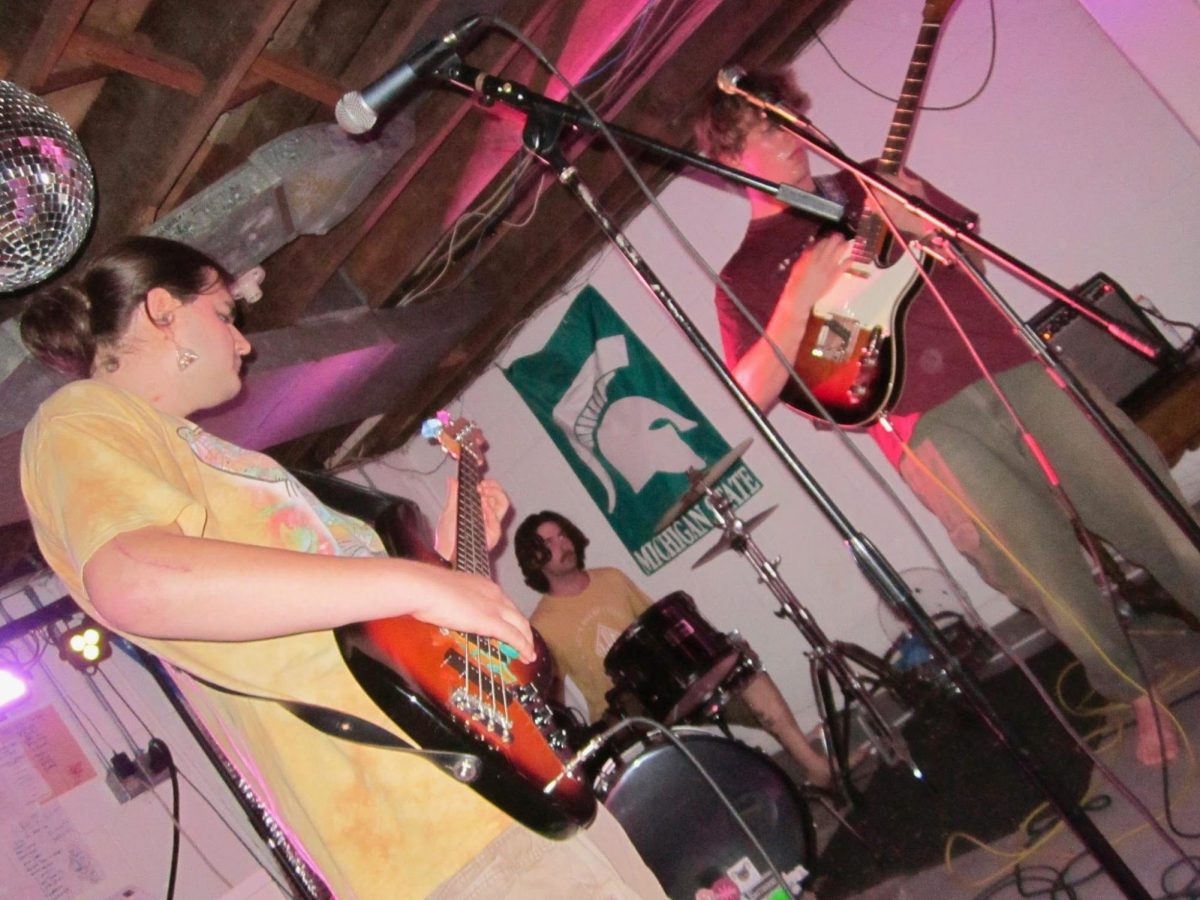
It feels both somber, crushing, and complete all at once. Yet returning to its beginnings, this album was not exactly posed for success. It faced significant studio pushback, an exasperating songwriting process, and the natural struggles of breaking new ground as an artist. As well, its rollout was essentially nonsensical, consisting of Winter inexplicably posting Leonard Cohen breakcore edits on Instagram Reels and appearing like a cryptid to perform at bars. Even the lead single seemed like nonsense — the aforementioned emotional behemoth “$0” (devoid of any of its surrounding context!). From a traditional perspective, it’s almost maddening. And yet, the album has slowly, yet surely, flourished.
It’s somewhat difficult to pin down exactly why the album has emerged as the late-blooming cult classic many have dubbed it. To some, it’s the endless depth of the impressionistic lyrics. To others, the dramatic brushes and swells of the album’s sound. To a portion of fans, the iconism: Identifying with Winter’s many masks (are you, disregarding gender, a $0 man? A heavy metal man? On a pirate’s crazy-eyed quest?).
In many ways, Heavy Metal stands as one of those rare albums that has transcended into something of a phenomenon, even outfitted with its own myth and folklore. Case and point, the enigmatic rumors of the album’s recording process. Winter has claimed it was recorded entirely in guitar centers or backs of taxis, the percussion was solely performed by a surly 60s-something construction worker, and (my personal favorite) that the bassist was a five year old prodigy they hired off of craigslist. It’s absurd — tall tales spiraling upward — but absurd in the same way as the album itself.
All this led me to kick off this review with the word “otherworldly”. The album certainly isn’t for everyone, but those who like it, live in it. The folklore, strange relatability, and perhaps even its partial status as an ‘outsider’ album resulting from its bizarre release, have all culminated in thousands of fans who are eager to step inside Winter’s world. It’s no wonder then that nearly all of his concerts (consisting mostly of solo piano/organ shows at bars or churches, mind you) have sold out within days. Against all odds, this album and its miraculous songs have won a lot of hearts, including mine. It’s a persistent project, one that grows on and with you, and one I simply cannot recommend enough.
If you’re looking for one of the stranger albums of last year, and an unlikely musical phenomenon, stream Heavy Metal today on all platforms. Cameron Winter returned to Geese for their third studio album, Getting Killed, which was released on Sep. 26.